In March 2026, Madagascar vanilla remains in an abundant market
The central issue is no longer product availability, but the international market's ability to absorb volumes that have become too heavy, campaign after campaign.
The signals converge: accumulated stocks, the still high level of the 2025/2026 campaign and buyer caution are keeping lasting pressure on prices. In this context, quality, traceability and stock rotation speed are becoming decisive again.
Method note
This summary combines Malagasy public references, foreign trade data and private market indications available in March 2026. Production figures for 2025/2026 and 2026/2027 should be read as commercial orders of magnitude rather than final statistical results.
Supply
The market remains overloaded by carryover volumes, stocks and another sizeable harvest.
Demand
Lower prices are not yet enough to clearly restart international buying.
Quality
The market is sorting more sharply: cuts and standard lots suffer more than premium segments.
Prices
Observed levels are moving closer to references compatible with an oversupplied environment.
Regime shift
From a scarcity market to a destocking market
The current decline no longer looks like a temporary correction. It marks the shift from a tension cycle to an outlet-driven logic, where available supply clearly outweighs immediately absorbable demand.
The sequence of recent years has changed the nature of the market: plantations financed during the high-price years are reaching maturity, while international buyers favor more cautious coverage and more selective purchasing.
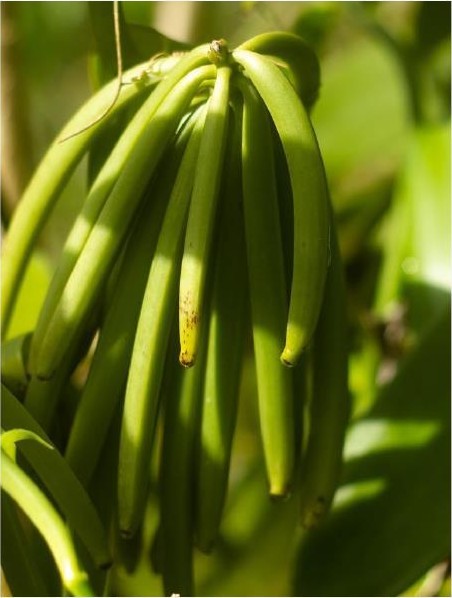
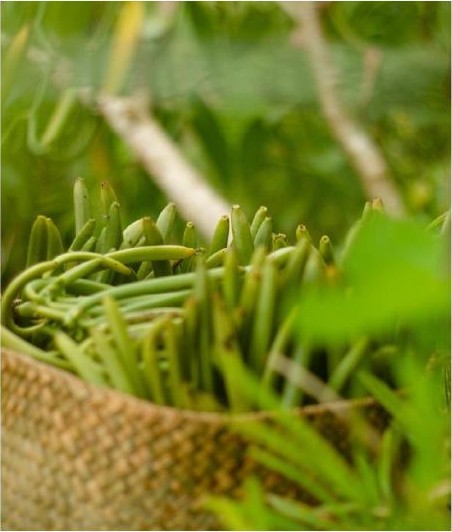
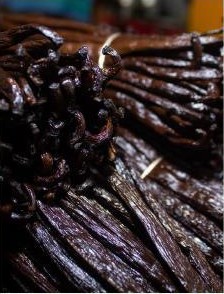
Green vanilla: the starting point of available supply.Prepared vanilla: commercial stock to move.
2015 - 2022
Long tension phase
High prices fed plantations, attracted new producers and sustained the idea that vanilla would remain a structurally tight market.
2020 - 2023
Constrained normalization
Floor prices, export limits and coverage behavior slowed the adjustment while allowing stocks to grow in Madagascar and among several buyers.
Since 2023
Structural surplus
The market has moved into a phase where selling, quality sorting and stock management matter more than anticipating imminent scarcity.
Supply
Volumes above absorption capacity
As early as March 2025, Malagasy authorities reported a record 2023-2024 campaign of 4,300 t for an estimated global need of around 2,500 t. Three months before the close of the 2024-2025 campaign, only 931 t had been exported, with more than 1,000 t in stock abroad and more than 1,000 t still present locally.
In March 2026, market estimates point to a 2025/2026 campaign of at least 4,500 t. Four months before the new harvest, less than 1,500 t would have left the country, leaving a carryover considered heavy to absorb.
The abundant flowering observed at the end of 2025 also suggests another substantial supply for 2026/2027. The year 2026 therefore looks more like a destocking year than a quick return to price tension.
Flowering and expected volumes.An abundant harvest for the sector to absorb.
4,300 t2023-2024 campaign mentioned by the authorities
931 texported before the end of the 2024-2025 campaign
1,000+ tstored abroad according to the 2025 official communication
4,500+ tprivate order of magnitude for 2025-2026
Market reading
The main problem is not product scarcity. It lies in slow movement, the addition of old stocks and the risk of several high-production campaigns following one another.
Demand and outlets
Prices are falling, but purchases are not clearly restarting
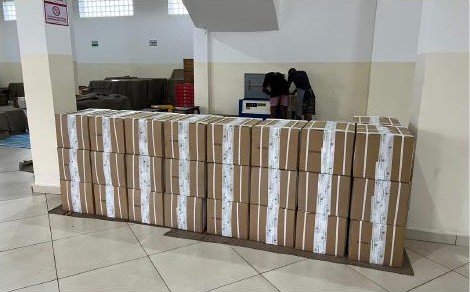
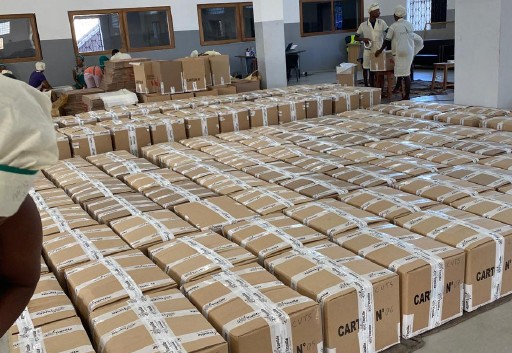
Packed lots for export outlets.
Main 2024 outlets - indicative shares
France37%
United States29%
Canada12%
International demand is not restarting fast enough to simultaneously absorb old stocks, campaign carryover and new harvests. Available estimates place global absorption at around 2,500 to 3,000 t per year, still insufficient to quickly clear the surplus.
Madagascar's outlets remain highly concentrated, mainly toward France, the United States and Canada. This concentration increases the sensitivity of the Malagasy market to decisions by a few key countries and to coverage choices by major buyers.
The price correction has not yet produced a clear recovery in purchased volumes.
Buyers have alternative origins, including Indonesia and Uganda.
The balance of power does not allow Madagascar to durably impose high prices in an oversupplied context.
Quality and segmentation
The market pays less for origin alone, and more for proven quality
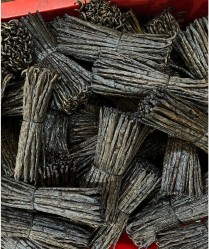
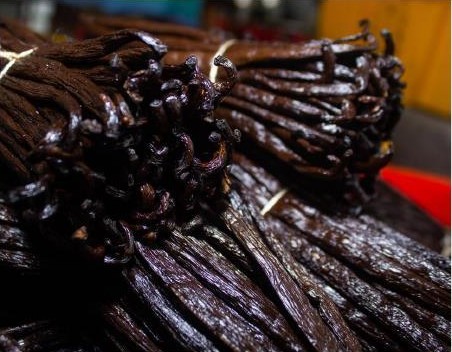
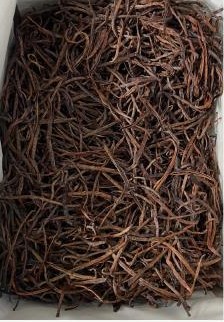
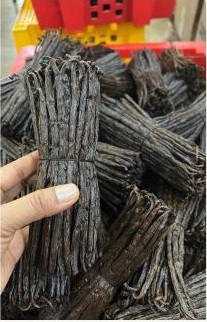
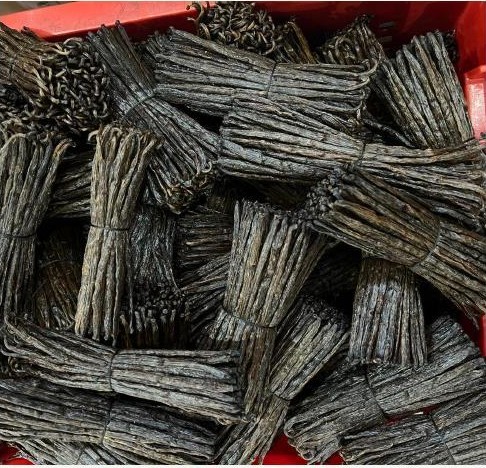
Careful preparation and visual sorting.Cuts category, more exposed to the surplus.Prepared bundles for better-valued segments.
A high share of cuts
Field observations estimate that around 40% of 2025/2026 production falls into the cuts category. This weighs heavily on industrial and standard segments, already the most exposed to surplus.
Logistical pressure
The increase in green vanilla volumes to process was not matched by an equivalent increase in drying areas, storage or handling capacity. This desynchronization may have encouraged more phenolic lots.
Properly sorted, well prepared and traceable lots retain stronger commercial defensibility. In 2026, the market no longer rewards a general promise of quality; it requires quality demonstrated lot by lot.
Prices
Market references compatible with the surplus are returning
The levels dominating in 2026 are those of an oversupplied market, not those of a market in shortage. The break with scarcity years or administered-price years is clear.
The current decline should be read as a regime shift rather than a simple cyclical incident. The key criterion becomes stock rotation, not the hope of a quick return to previous levels.
Cuts
15USD/kg for qualities oriented toward extraction or industrial use.
Long / red
25USD/kg for more presentable and better prepared standard lots.
Gourmet
50USD/kg for premium segments defended by sorting and preparation.
Value depends on segment, sorting and lot presentation.
Slightly more resilience in certified channels
Certified or premium operators seem better able to absorb the decline when minimum-price or premium mechanisms can still cover average costs estimated around 20 USD/kg.
In other words, the market does not reward Malagasy vanilla uniformly: it distinguishes segments, preparation and supply regularity more clearly.
Short-term risk
Cash flow, logistics and climate remain under watch
Immobilized stocks: a cash-flow and logistics issue.
450,000+people affected in Madagascar according to public humanitarian reports after cyclones Fytia and Gezani in February 2026.
Toamasina
The port city and surrounding area suffered major damage, with logistical disruption and significant flooding.
Brickaville
The eastern zones underline their structural vulnerability whenever a sequence of climate events disrupts roads and warehouses.
Signal to remember
The first risk is not theoretical: it is commercial. When stocks turn slowly, cash-flow tension increases for producers, collectors, preparers and exporters.
Climate risk remains present. Fytia and then Gezani hit Madagascar only days apart in February 2026, causing significant human and material damage, especially on the country's eastern side.
At this stage, nothing confirms a major national shock to the vanilla harvest. However, these events confirm the logistical fragility of a key part of the sector: transport routes, intermediate storage, port access and service continuity.
For operators, the issue is therefore not only agricultural. It is also financial and operational: how long can volumes remain immobilized before weighing on quality, liquidity and purchasing capacity?
April - September 2026 outlook
The central scenario remains persistent downward pressure
Collection and selling pressure remain central to the 2026 scenario.
Central scenario
A still congested market
Industrial qualities, cuts and standards should remain the most pressured until old stocks and campaign carryover have been clearly absorbed.
Defensive segments
Premium and certified better supported
Gourmet lots, properly sorted, as well as some certified channels, should resist better, without being enough to trigger a general market rebound.
Rebound conditions
Only three drivers
A clearer recovery would require either a real drop in supply, a major climate shock, or a faster-than-expected return of international demand.
In practice, 2026 appears more favorable to a strategy of sorting, commercial discipline and lot selection than to waiting for a sharp price reversal.
Strategic reading
Sell better, sort more, protect value segments
Madagascar retains its structural strengths: a recognized Bourbon origin, historical know-how and a central role in the global vanilla trade. But in March 2026, these strengths are temporarily neutralized by the scale of volumes to absorb and by persistent buyer caution.
In this context, the priority is no longer to artificially support prices. It is to make sales flow, improve quality sorting, protect certified and premium channels, and restore commercial discipline suited to a market that has become durably more competitive.
Origin and field know-how.Plantation monitoring and consistency.Final sorting to protect value segments.
Stock rotation
Move available volumes faster to reduce exposure to price risk and commercial ageing of lots.
Strict segmentation
Do not mix standards, cuts and premium segments: value is preserved first through sorting.
Preparation and traceability
Strengthen preparation quality, regularity and documentary visibility to keep a real commercial advantage.
Market discipline
Avoid short-term speculative expectations and prioritize sales consistent with the reality of the global market.
References and sources
Reference points for reading the market in March 2026
Indicator
Order of magnitude
2023-2024 campaign mentioned by the authorities
4,300 t
Recurring global demand
2,500 to 3,000 t / year
Exported before the close of 2024-2025
931 t
Stocks reported in March 2025
1,000+ t abroad and 1,000+ t locally
2025-2026 campaign (market estimate)
4,500+ t
Estimated share of cuts
around 40%
2026 price references
15 / 25 / 50 USD/kg
Sources used
Presidency of Madagascar - Council of Ministers, March 19, 2025.
Official notice on the 2025-2026 vanilla campaign, released in November 2025.
WITS / UN Comtrade - Malagasy vanilla exports by destination country, 2024.
IFRC - Madagascar: Cyclones 2026.
NASA Earth Observatory - A Second Cyclone Slams Madagascar, February 18, 2026.
Private market estimates published in March 2026 for production, segmentation and price levels.
Public data mainly describe the campaign framework and imbalances already visible in 2025. The freshest elements on the current campaign and qualitative segmentation rely more on commercial estimates. They should be interpreted as useful reference points, not final statistics.